Starkbier, Stehausschank, and Boazn: Munich Beyond Oktoberfest

Purely by coincidence, I was able to check out Starkbierfest (Strong Beer Fest) in Munich on my way to my brother’s 50th birthday celebration in Austria. The lesser-known Munich beer fest takes place during Lent when brewers supply hearty Doppelbock beer to fasting monks, giving them sustenance to make it through the day. They call this time of year “Starkbierzeit”, meaning strong beer season.

There’s a good argument to be made that it’s better than Oktoberfest. And it’s one example of Munich beer culture that doesn’t immediately come to mind when outsiders think of the infamous beer-loving city.

Starkbierzeit has been on my radar for a while, and I had heard of a couple of other beer-related things that I wanted to check out in Munich. Things that you’re not going to find in a guidebook. With just over twenty-four hours to myself, I took the opportunity to explore them all. Liver be damned.

Pictures of the Stehausschank at Nürnberger Bratwurst Glöckl am Dom from inside and out.

The Stehausschank at Nürnberger Bratwurst Gloeckl am Dom. Note the bell next to the window.

My first opportunity came up after lunch at Nuernberger Bratwurst Gloeckl am Dom. Many know of this restaurant’s succulent little sausages and the tip-top pours of Augustiner, but tucked away by an ancillary entrance to the restaurant is a nearly extinct Munich beer tradition.

The restaurant has a separate standing bar, known as a “Stehausschank”. The small, austere space is designed for a quick beer. So, there’s no seating or any other type of feature meant to accommodate someone for a lenghty period of time.

The austerity is by design. It’s also part of its charm and what makes it unique.

There’s a buzz to the space from the window that serves customers of the Stehausschank and the restaurant, to the hustle of the Munich street life just outside the door. Patrons and restaurant employees regularly come and go, but the beer’s impeccability grounds you. Specifically the Augustiner Helles vom fass (from the barrel). It locks you in, making you impermeable to any potential distraction.

In addition to the Helles, the day I was there, they were also serving Augustiner’s Dunkel, Edelstoff, and Weissbier.

Aside from the beer window, other notable features are a cigarette vending machine and a bell on the wall. Don’t ring it. If you do, you have to buy everyone a round. The good news is that if you make this mistake, the space can’t accommodate many people.

Local brewery Giesinger has opened several establishments around the city that they call Stehausschank. The experience is a modern interpretation of the tradition. They are casual, beer-focused bars, and they give a nod to the tradition seen at Bratwurst Gloeckl. However, they have some seating and definitely feel more inviting like a traditional drinking establishment that welcomes a few rounds as opposed to a quick one on the go.

Giesinger has several Stehausschank locations in town, including one across from the open-air market Viktualienmarkt, which was where I went. There were no chairs or stools inside, but the walls include seating that can be folded down if customers want them. There were a few small tables too.

The lager heavy menu was varied, but included a Red Ale and a Triple. I had an excellent Schankbier (it was served in a Teku glass, and I’m saving my comments on that for another post.)

Just a few doors down from this spot is Zum Stiftl Stehausschank. As nice as this place was, including the small door behind the bar where wooden kegs of Augustiner are loaded up for tapping, it was even less of a Stehausschank than the Giesinger spot I visited. Trying to exercise some restraint, I opted for an excellent NA Augustiner Hell here.

There were several other “Stehausschank” I saw around town, but none of them seemed to be a proper “standing bar”. They all look like great places for a drink, but if they’re going to use that name, it would be great to see them embrace the tradition a bit more. Or, just call it something else.

 
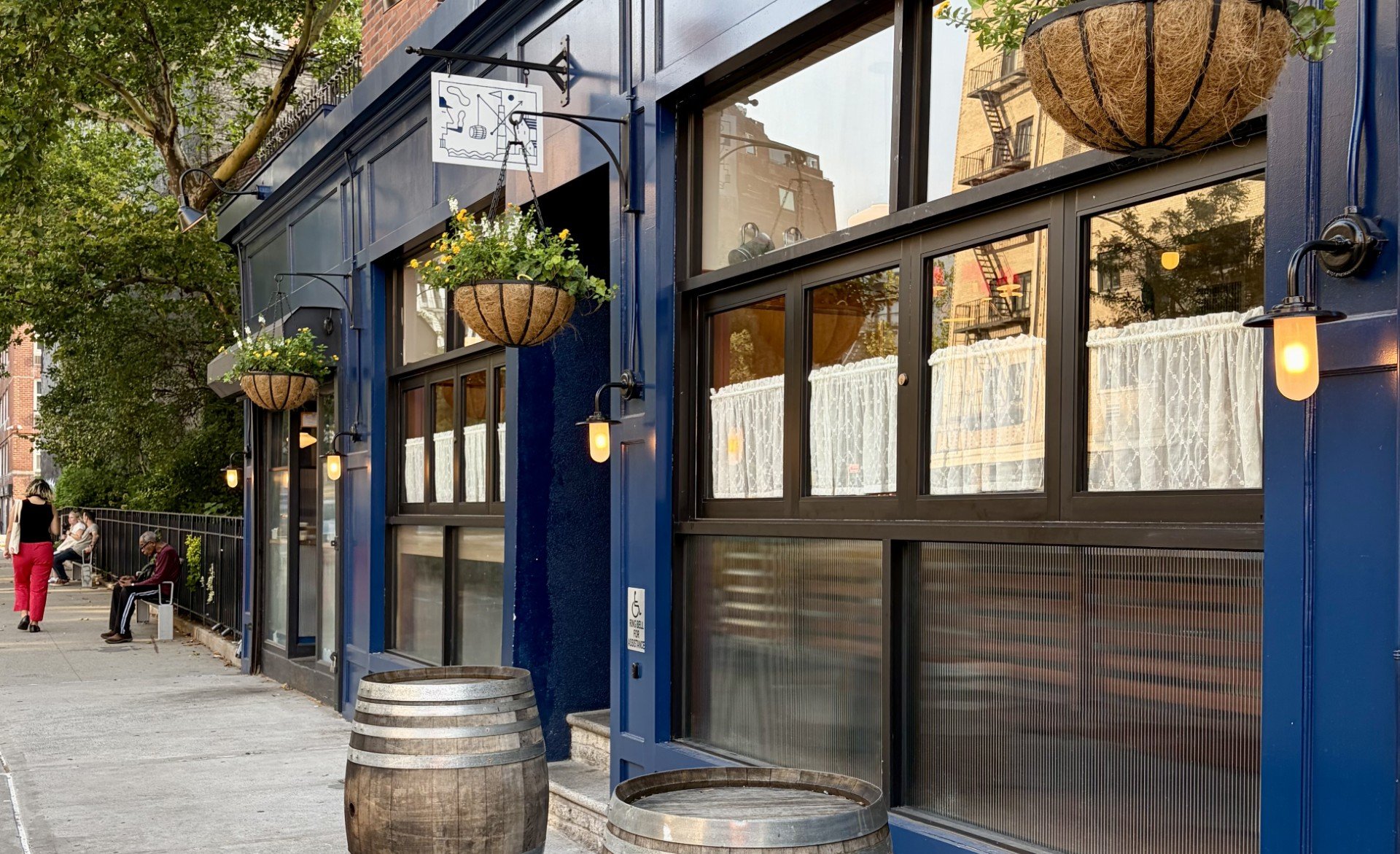
Le Clou inside and out including a glass of Paulaner on the bar.

The Le Clou Boazn in Munich.


Far from the kitschy beer halls of Munich, Boazn are small, unpretentious pubs that, as with the Stehausschank, cater to locals. One might even call them dive bars.

Located in the center of town, Le Clou was the first Boazn I visited. It’s a great, compact bar with dedicated regulars, despite its touristy location. Several beers are available, but my hunch is that Augustiner is the drink of choice with Le Clou’s patrons. Staff and regulars were friendly, and readily willing to chat. As I told them I was heading to Starkbierfest later in the evening, they warned me about the strength of the beer.

The second one I visited is called Flaschenöffner, and it’s just outside the old town in the Gärtnerplatzviertel neighborhood. Flaschenöffner is a bit divier than Le Clou, which is in no way meant to be an insult. It’s a great spot. One I could see myself frequenting if I lived in the area.

As it was a Monday night, it was a little quiet. But there were small groups of people enjoying themselves over a few drinks, and it had a good vibe. The beer list was a good mix of local and traditional, as well as more contemporary styles and regional beers too. I opted for a skunked bottle of Budvar. It somehow tasted right in the moment.

 
The Flaschenöffner Boazn inside and out, including an bottle of Budvar on the bar.
 

Switching gears, Starkbierfest is a great opportunity to experience the romantic elements of Oktoberfest (beers by the liter, people dressed in Trachten (i.e. dirndls and lederhosen) dancing on tables, etc.) without having to deal with the mobs of tourists.

Instead of the festivities taking place at the infamous Theresienwiese (Therese's Meadow) fairground, where Oktoberfest occurs, breweries celebrate Starkbierzeit at their varying locations around town.

Paulaner is thought to be the first to make Doppelbock, and the Starkbierzeit festivities at their Nockherberg location are viewed by many as the place to be. So, that’s where I went.

Though outdoor space is available, the party is really inside with an expansive amout of tables and a stage for live music. I felt a little like an outsider in the more sparsely populated area of venue with unreserved tables, but I didn’t feel alone.

Before getting too festive, I ate Schweinsbraten (crispy roast pork) with a jus and Kartoffelknodel (potato dumplings). It’s a good dish to pair with Paulaner’s Doppelbock called “Salvator”. The food was good. Nothing to write home about. But the beer was great. It’s not a style I gravitate to often due to its sweetness and high ABV (theirs weighs in at 7.9-percent), but I do enjoy it. And I really enjoyed it in a stein at a fest where the particular beer itself is celebrated. It’s strength gave me liquid courage stand on my bench, sing, and hoist my beer in the air.

 
Two image from Starkbierfest at Paulaner. One with a stein and a plate of food. The other with revelers standing on benches and hoisting steins in the air.

Starkbierfest at Paulaner am Nocherberg.


I was blown away by the amount of people there oozing Gemütlichkeit on a Monday night in early March. Despite being alone, I could’ve stayed longer, but it had been a long day of drinking beyond just Starkbierfest. So, I listened to the warnings received by the locals and strolled home on an incredibly pleasant evening, with an incredibly pleasant buzz. I walked away with a greater appreciation of Munich’s beer culture, which is more dynamic and interesting than how it’s typically portrayed.

(For deeper dives on Munich, check out the blog A Tempest and a Tankard by Franz D. Hofer, including a recent post on Starkbierzeit. Also, if you’re into Boazn, give the boaznengel3000 Instagram account a follow. Finally, there’s a very handy map, Münchner BOAZNRADAR, that’s worth exploring, especially if you’re heading to Munich.)

Lukr Stout Nozzle vs. Handpump
 
Marlowe Artisanal Ales owner/brewer Zac Ross pour an Irish-style Dry Stout from a Lukr faucet with a stout nozzle.

Marlowe Artisanal Ales brewer/owner Zac Ross pouring a stout through a Lukr faucet with a stout nozzle.


Despite being a noted traditionalist and sometimes pedant, I’m not a total Luddite. For example, though I don’t really care for anything but traditional British styles from a handpump, I recognize other styles, even some lagers, can taste pretty good from them. I even wrote an article about cask lager that Craft Beer & Brewing Magazine was kind enough to publish.

So, I didn’t immediately scoff at Marlowe Artisanal Ales owner/brewer Zac Ross when he told me he got a Lukr Stout nozzle. My interest was piqued for several reasons, and I was getting thirsty thinking about them.

First, I didn’t even know Lukr made this nozzle. The Czech company is well-known in the industry for their faucets that create decadent, “wet” foam, and they’re almost exclusively associated with lager. Particularly Czech styles. It’s unlike traditional faucets here in the US, and it takes a bit of skill to master its use.

 
Lukr faucet with a stout nozzle.

Lukr faucet with a stout nozzle.


To be honest, I can see a Stout tasting pretty good from the standard Lukr faucet. However, the company created this attachment specifically for use with nitrogenated beer. They call it “Lukr Stout” and note it can be used with other “dark and semi-dark beers.”

Part of the pitch is that it creates smoother, creamier foam. But Lukr faucets already create smooth and creamy foam. It’s their thing. Is this just turning it up to eleven?

Perhaps most important is the nozzle’s ability to facilitate the cascading effect associated with nitro beer as it settles.

Zac was up for doing some side-by-sides, and we explored the different presentations of an Irish-style Dry Stout he just released. This was with the very important caveat that the beer wasn’t nitrogenated. So, further taste-testing will be needed. But for now, this is what I’ve got.

 
Two dudes behind two beers.
Two different glasses of the same stout.
 

The first pour I had was from the sparklered handpump. And it was in perfect balance at that ideal cellar temperature. It was a smooth ride that was really enjoyable.

Next was from the Lukr stout nozzle. The beer from this line was served colder, and the most notable difference was the mouthfeel. It did present a little bit more of the roasty character typical of an Irish-style Dry Stout. The foam was great, though without the nitrogen, it lacked the theater of the cascading beer.

Finally, out of curiosity, I asked Zac for a pour from the Lukr faucet with the standard nozzle used with lager. The foam seemed similar to the pour from the Stout version, but the mouthfeel and taste was different. It was a little pricklier on the palate and was making me think of Schwarzbier.

 
Dark picture of a dark beer.
 

The taste test was fun and the beer was really good. I’m definitely curious about trying a nitro beer poured from the nozzle, though I’m not convinced it will win me over.

I adore Lukr, and I appreciate their efforts to innovate and grow, but I’d rather have well-brewed, well-cellared, and well-poured cask beer from a handpump when I’m in need of a smooth, cascading pint.

That said, this could be an instance where I don’t cringe as hard when I see a British-style dimple mug used with a Lukr faucet. Personally, I wouldn’t pair the two. Tulip pint glass all the way.


Cask in Rome: Hitting the Handpumps in the Eternal City
Ponte Garibalid, Rome, Italy.

Ponte Garibaldi, Rome, Italy.

I was caught off guard when I spotted a handpump in a photo of the Roman pizzeria L’Elementare. Known for Romana-style pizza, L’Elementare has a young, hip vibe. It’s a spot where I wouldn’t be surprised if they had IPA, Italian Pils, etc. from bottles, cans and, kegs. But how the hell did a handpump end up here?

Before this, I only knew one place in Rome that served cask beer from a handpump, or “pompa”. That is the venerable pub Ma Che Siete Venuti a Fà (or, Macchè for short), and it’s right across the street from L’Elementare. Was this proximity a coincidence, or is cask beer a thing in Rome?

I had been researching Rome in preparation for a trip to Italy with just two nights in the Eternal City at the end. And though I’ve been to Italy a few times before (including two visits to Rome), I’ve never even thought of having cask beer there. (Perhaps it’s embarrassing that as a cask enthusiast, I never noticed this before, but in my defense, most prior trips were with extended family where indulgences in local beer scenes were not really feasible.)

However, spotting the handpump at a pizzeria set me off. I did some more digging and found there’s a small cask beer scene in Rome that goes back about twenty years. Though I was once again traveling to Italy with family, this trip was going to have to be different. I needed to explore the beer scene a bit and find out what’s going on.

The bar at L'Elementare in Rome, Italy.

The bar with two handpumps at L'Elementare, Trastevere. Sadly, they were closed for renovations while I was there. So, this picture is most certainly now dated. Image source: Google Images.

How We Got Here

Manuele Colonna of Macchè points to Birra del Borgo as one of the leading reasons there’s a tradition of birra alla pompa in Italy. The influential brewery was founded in 2005 by Leonardo di Vincenzo, and one of their flagship beers is ReAle, an IPA inspired by cask beer in the UK.

Before this, Colonna opened Macchè in 2001 and started serving cask beer a few years after that. Colonna and di Vincenzo partnered to open Bir & Fud in 2007 across the street from Macchè (where L’Elementare is now located), which also served handpumped cask beer. Though closed for several years now, it was cherished by many and is still frequently mentioned when discussing the Roman beer scene.

The two partnered again in 2009, along with Teo Musso of Baladin, to launch Open Baladin in Rome, though Colonna exited the partnership shortly before opening. Open Baladin has three handpumps.

While Colonna points to di Vincenzo as being instrumental in the initial proliferation of cask beer, he himself has undoubtedly played an influential role with Macchè, Bir & Fud and Be.Re., another Roman establishment he helped open in 2016.

That same year, Treefolk's Whisky & Beer began holding a periodic cask festival called “Londinium”. The event provides a friendly competition between Italian and English brewers.

The original Treefolk’s opened in 2003 and served cask beer over the course of its existence. That location closed 2017, but a new Treefolk’s Public House opened in 2020 and went all in on the British pub format, including 12 handpumps. It has since been the destination for cask beer in Rome.

Flyer for 2016 Londinium Cask Festival in Rome.

Flyer for the first Londinium Cask Festival at Treefolk’s in 2016. Image source: Croce di Malto.

Today, from my count, there are at least fifteen locations in Rome serving beer via handpump. And while a number of British breweries send their casks here, there are a several Italian breweries like Hilltop Brewery, Shire Brewing, and Linfa Brewery that are regularly cranking out casks for the pubs.

Beyond Rome, you can find handpumps in most Italian cities at establishments with an interest in selling anything beyond the standard Peroni or Moretti. Even in Sicily. However, I suspect most of these are serving kegged beer hooked up to a handpump (i.e., they’re not serving cask conditioned beer). To my knowledge, I didn’t have any of that on this trip.

In England, pouring kegged beer through a handpump is controversial, and I get why. Cask beer is finicky and requires particular care. However, the art of properly served cask-conditioned beer is a thing of beauty, and the results can be sublime.

A handpump used to indicate that you might be getting something special. While a kegged beer from a handpump might be good, it’s not the same thing, and there’s a need to provide clarity so customers know what they’re buying.

I understand the desire to preserve the practice of serving cask-conditioned beer from a handpump in England. I’m not sure how I feel about serving finished beer from a handpump outside of there. It might not be a bad thing as long as there are no misrepresentations.

Andiamo

I had a warmup in Florence before making my way to Rome that still has me a bit conflicted. Popping into The Joshua Tree Pub, I found Fuller’s London Pride and Smithwick’s on the handpumps. Sparklered. Though I’m generally ambivalent in the sparkler debate, I’m also a traditionalist. Despite knowing other traditionalists would find London Pride through a sparkler to be sacrilege, this pint was divine. Absolutely delicious.

I asked the bartender about the untraditional serving method, and he explained they prefer it with a sparkler and that some English folks come in and have no problem with it (they must be from the north). I still don’t know how I feel about it, but when I told my (southern) British brother-in-law about it shortly afterwards (we were in Italy for his marriage to my sister-in-law), he was not very chuffed.

Regardless, The Joshua Tree was a cool place, and I wish I could’ve stayed longer to explore the menu. The fresh Tipopils was calling me, but I had a train to catch.

Images of Fuller's London Pride served from a sparklered handpump.

Fuller’s London Pride served from a sparklered handpump at The Joshua Tree Pub in Florence, Italy.

Allora, Roma

We hit Rome on the tail end of our trip. Before this, we spent over a week in Tuscany, and though I absolutely love Tuscan wine, I arrived in Rome drained from traveling and ready for some good beer.

On our first afternoon, I squeezed in a one-and-done at Open Baladin with my wife and kids. I grabbed a very good pint of Bitter from one of the three handpumps with some decent lacing in a pretty, etched tumbler.

I asked the bartender if they serve cask-conditioned or kegged beer from their handpumps. He curtly replied, “I don’t know,” and walked away. It seemed rude, but I thought maybe he was going to find out and come back to give me the answer. He didn’t. Va bene, amico mio. Grazie.

His response was consistent with a general attitude my family noticed on the trip. Italians just seemed to not be feeling Americans as much as they did on my prior trips. The only thing I can think that’s changed is Trump being back in office. But if that’s the case, I’m scratching my head, because it’s not like Meloni is all that.

 
A pint of bitter and handpumps at Open Baladin in Rome.

Open Baladin, Rome, Italy.


This made me think my brief stay in Rome was not going to be great for chatting with locals about cask beer. Then I had a completely different experience when I parted ways with the family for a bit and headed to Treefolk’s.

I was warmly welcomed by the bartender and asked him about kegged versus cask-conditioned beer, and he assured me that all their handpumps were pouring the latter. Then he brought me back to the cooler to show me.

Since it was August, only eight of the twelve handpumps were flowing. Just eight. SMH.

I went local and kicked off with Take Five, a Session IPA from the Italian brewery White Dog. It’s not a style I typically gravitate toward, but this was an excellent beer. I could’ve had it all day. It was an ideal, sessionable ale for a late summer afternoon.

Five of the eight running handpumps were occupied by British brewer Wold Top, which was new to me. Though I was intrigued, I couldn’t resist a pint of Thornbridge’s Jaipur for my second and final pint there. It has been a very long time since I’ve had it, and it tasted incredibly fresh. It had its pleasant bitterness along with its beautiful color and great foam/head retention.

Treefolk’s was great. The bartender politely answered all my questions, served me two delicious pints, and I left feeling much better than I did when I left Open Baladin.

 
An image of a cask pint being poured from a handpump and a separate image of four casks in a cooler.
 
 
A settling pint of cask ale on top of the bar at Treefolk's Public House in Rome.

Treefolk’s Public House, Rome, Italy.


The next day, after an aggressive morning of sightseeing with the family, we went to Be.Re. + Trapizzino for a bite and a drink. The spot combines a pub with a location for Trapizzino, which makes pizza pockets, essentially. They’re a relatively new Roman street food that takes triangular pieces of pizza dough, opens them up, and stuffs them with a variety of fillings.

I got a kick out of the menu, which initially confused me when my eyes were drawn to the “cask beer” section that consisted of three lagers. Then I realized that section refers to finished beers served directly from a barrel (vom fass, if you like) and not “cask conditioned”. As an American, I’ve been conditioned in our own beer nomenclature. Right next to the cask section were the “handpump” beers.

They had an Extra Pale Ale (EPA) called Tommy Gun from Shire Brewing and a Chocolate Porter from Birra Perugia available when I was there. I opted for the EPA, which was excellent. It was light-bodied, but flavorful. The beer was refreshing, and like the White Dog I had at Treefolk’s, it went down well on a warm summer day.

Like Treefolk’s, the service at Be.Re. was very polite and accommodating of me asking questions and taking pictures. Fantastic beer and stellar pizza pockets are a winning combo. Who knew? But seriously, it’s not shocking to find out that Italian pub grub can be top notch.

 
Handpumps at Be.Re. + Trapizzino.
 
 
Beer menu at Be.Re. + Trapizzino.
Two images. One of a beer and the other of two trapizzino at Be.Re. + Trapizzino.

Be.Re + Trapizzino in Rome, Italy.


Macchè was the last beer stop of the trip. It’s no surprise that it’s so popular. It’s got a cool vibe and an excellent selection of beer. I particularly love pubs with scattered nooks for people to gather in small groups, and that’s exactly what they have here, in addition to a few tables out on the quaint but bustling Trastevere neighborhood street. Again, polite, accommodating service.

My wife graciously took the kids, and I was able to casually enjoy the space and my final cask beer in Italy. It was a collab from Linfa Brewery and Birrificio Aimara called “Corgi”. The Extra Pale Ale was delicious. Like the other beers mentioned above, they’d likely be good any time of the year, but were hitting perfectly in summer.

I enjoyed my beer at a small table out on the street and savored every bit as I watched the Roman street life on an incredibly pleasant August afternoon. I easily could’ve had a few more beers just sitting there by myself, but the trip was quickly coming to an end, and I needed to pack and get ready to go home.

 
An image of a pint on the bar at Macchè, and an outside view.
 

Buon Viaggio

There are a bunch of other spots in Rome that have handpumps, and I wish I could’ve made it to them all. It’s always a brief whirlwind when I’m in town, and I packed in what I could in less than 48 hours with my wife, kids, and in-laws.

Though brief, I was there long enough to get a taste of the cask beer scene. But is it a thing? A Roman would probably say not really. But as an outsider, though it is small, I found it impressive. I don’t believe there is a single US city that has more handpumps than what Rome has (I know that’s not saying a lot, but still…) And the quality is fantastic. I didn’t have a single bad pint.

While Rome isn’t behind on beer culture trends, its beer revolution came decades after the US. And in the US, handpumps were all over in the years after our revolution. But as a new generation of drinkers started to influence the scene in the US, cask beer disappeared. Perhaps that will happen in Rome (and the rest of Italy) as well.

However, cask beer in the US was always very spotty. Quality varied greatly, and that no doubt helped turn off people to the format. My limited Italian experience showed real skill in brewing and serving cask beer. In August. Perhaps that may help offer a different trajectory and some longevity.

I hope to make it back someday when I can enjoy the city at a more leisurely pace. The beer scene is excellent, with or without cask beer, but I hope the handpumps are still around when I come back. A dopo.


Keep it Simple and Classy: A Guide to the Only Beer Glasses You Need


Stocking beer glassware can be a daunting task. With so many options to choose from, it might be tempting to stick with a shaker pint. And while the shaker isn’t as bad as many make it out to be, it really shouldn’t be a major player either at a beer bar or your home bar.

But having a respectable selection of glassware doesn’t need to break the bank or become unmanageable. There are four widely available glass styles that are affordable, cover a wide array of styles, and will satisfy the most discerning beer drinker.

Here they are.

Willi Becher


The Willi Becher is one of the most versatile beer glasses available. Its simple, slender, and slightly curved shape makes it attractive without being ostentatious. The curvature helps it retain foam and carbonation. While it can be used for ales and mixed-fermentation beers, it’s especially well-suited for lagers, particularly given its Germanic origins.

You can also find it in an array of sizes from 10 to 20 ounces. So, there’s flexibility to fit your needs.

Use this glass with Helles, Dunkel, Vienna Lager, Schwarzbier, Märzen, Festbier, Bock, Baltic Porter, Czech Pale, Amber and Dark Lagers, German Rauchbier, and Adjunct Lager. However, you can cross over into ale territory with delicate beers like Kölsch, Altbier and Cream Ale too.

Fun fact: Becher means “cup” in German, and this one was created by a man named Willy Steinmeier. So, Willy Becher = Willy cup.

Tulip Pint


Though often associated with Guinness, the tulip pint glass is not proprietary and is widely used. And for good reasons. Like the Willi Becher, the simple design of the tulip pint has a subtle curvature, creating a better sensory experience than other beer glasses found in the British Isles (e.g., the nonic, dimple mug, and conical (aka shaker)). Its curvature helps enhance aroma and preserve foam better than these other glasses. And though it’s great for British-style beer, it works with others as well.

Generally found in a larger size (16-20 ounces, and don’t @me about a “proper pint”), this glass is best with low to mid strength beers that may include Bitter, Dark Mild, Brown Ale, Porter, Stout, Scottish Ale, Irish Red Ale, Blond Ale, Pale Ale, IPA and Amber Ale.

Stemmed Tulip


This one may be a little pricier than the others, but it is still within reason and is key to a well-rounded glassware selection. The stemmed tulip glass works best with a variety of Belgian beer styles, but it can be used with others. It’s an incredibly versatile glass that will elevate one’s beer drinking experience as it’s a little more dressed up in appearance, giving a more elegant flair than others. This subtly curved glass is ideal from a sensory perspective (you may be picking up on a pattern here by now).

They can be on the larger side, which accommodates a robust amount of foam.

Consider these styles for this glass shape: Dubbel, Tripel, Saison, Biere de Garde, Golden Strong Ale, Strong Dark Ale, Gueuze, Lambic, Wild Ale, Oud Bruin, Flanders Red Ale, and Witbier/Wheat Beer.

(A quick note: stemmed tulips can vary in shape. In particular, some have a much wider bowl than the glass depicted here. Those types of glasses are great, but I feel the narrower version depicted here lends itself better to a greater array of styles.)

Snifter


Sure, it’s occasionally nice when an unknowing bar serves a 12-percent stout in a 20-ounce shaker pint for a fraction of what the beer should cost. But strong, bold beers are properly served in a smaller vessel (holding 8-12 ounces), and a snifter glass is quite often best suited for these beers. A snifter beer glass is essentially a stout version of the stemmed tulip and it’s designed more for sipping rather than chugging. The intense curvature accentuates the aromas and enhances the sensory experience.

This glass is great for: Barleywine, Doppelbock, Double and Triple IPA, and anything “Imperial”.

--

Stick with these four, and your glassware game will be simple and stylish, meeting all your needs from Pilsner to Gueuze. And, you won’t have to spend an absurd amount of money to buy them!

(Original glassware images for this post come from the Sahm website.)

True to Tradition on the Rhine: Kölsch, Altbier, and Their Iconic Glasses

With just 25 miles separating Düsseldorf and Cologne along The Rhine, there’s some overlap between their beer cultures. Visit a Brauhaus in either city and their iconic beers – Altbier and Kölsch, respectively – are traditionally served from wooden barrels (vom Fass) by waiters called Köbesse.

These waiters are known for having an attitude, adding a bit of theater to the experience. They circulate through a brewery’s pub with trays of small, cylindrical beer glasses (called “Stangen” or “Stange” if it’s just one) and will replace a customer’s drink as soon as it’s empty – if not sooner. These trays are called Kranz, and the ones used in Cologne are specifically designed with slots to hold each glass.


A Köbine carrying a Gaffel Kranz. Image source: Gaffel.


Altbier and Kölsch are also unusual as they’re ales in a country known for lager. They’re holdovers from a time when lager wasn’t so dominant.

The beers themselves are the most notable difference between the two cultures. Kölsch is pale, light, and refreshing, while Altbier is darker and has a more robust flavor, lending itself well to hearty dishes.

The Glasses

From left to right (all images sourced from the respective brewery): 1. A Köbes fills a Kranz at Brauerei Päffgen. 2. Holding a Stange of Früh Kölsch. 3. A Stange of Uerige Altbier. Notice the notches on the coaster indicating how many beers the customer has had. 4. A toast to Füchschen Alt.

Much more subtle, but still distinctive, the glass used for Altbier is different than the one used for Kölsch. Simply put, they both have a circular, cylindrical shape, leading to the name “Stange”, which means rod or pole, but the Altbier glass is a bit more stout than the slender Kölsch glass. Though both styles can come in various sizes, Kölsch is typically served in a 0.2L glass and Altbier in a 0.25L glass.

Scouring old glassware catalogs, I can’t find any examples of an Altbier glass that was specifically connected to the style or to Düsseldorf. However, there were several examples for Kölsch going back to the 1930s.


Clip from the 1937/38 Ankerglas Bernsdorf catalog depicting two Kölner Stangen. Image source: glas-musterbuch.de


Though there isn’t a lot of readily available details on the history of these glasses, it is clear that both have been part of the beer cultures in these two cities for generations. And it’s hard to imagine anyone would think of using a different glass any time soon. Aside from perhaps the Masskrug at Oktoberfest, the respective Stangen with Altbier and Kölsch are more hand in hand than any other beer style/glass combo in Germany. So, don’t expect to find your beer in a shaker pint or a TeKu on your next trip to Düsseldorf or Cologne. Joking aside, don’t even expect to see it in the versatile and widely used Willi Becher, which is not a bad alterntive if you’re in a pinch.

The Kölsch Convention

In fact, in Cologne, the glass is so entwined with the culture that its use was formally recognized in the 1986 Kölsch Convention – an agreement between the brewers of Cologne that dictates the parameters for what can be called “Kölsch”.

Within the text is the following passage:


The producers of "Kölsch" shall use their best efforts to ensure that "Kölsch" is only served in the so-called "Kölsch-Stange" (Cologne-Stange), as is commonly used for serving "Kölsch."


In the States


Milk Tube in a Kölsch Stange at Human Robot Brewery in Philadelphia, PA. Image source: Human Robot.


Between the two glasses, the Kölsch Stange is more widely used in the States, which corresponds with the greater ubiquity of the beer style. It has also become the vessel of choice for the “milk tube” trend made popular by Human Robot in Philadelphia where wet foam from a Lukr faucet is poured into a Stange and drank like a shot.

But Altbier is a great style that I’d love to see more brewers making. And if they want to live that #properglassware life, Altbier glasses are readily available from reputable companies like Rastal and Sahm to serve those beers.

Choosing one glass over the other isn’t going to greatly impact your sensory experience when drinking Kölsch or Altbier, outside of the visual aspect that traditionalists and beer nerds like me hold dearly. However, that doesn’t mean that we should use the two interchangeably. They certainly don’t in Germany.